

6th August 2026
Own Correspondent
European Union officials described the launch of ASPIRE as symbolic of its concrete manifestation of its strong and enduring partnership with Botswana — a relationship grounded in shared principles of sustainable development, inclusive economic growth, good governance, and regional cooperation.
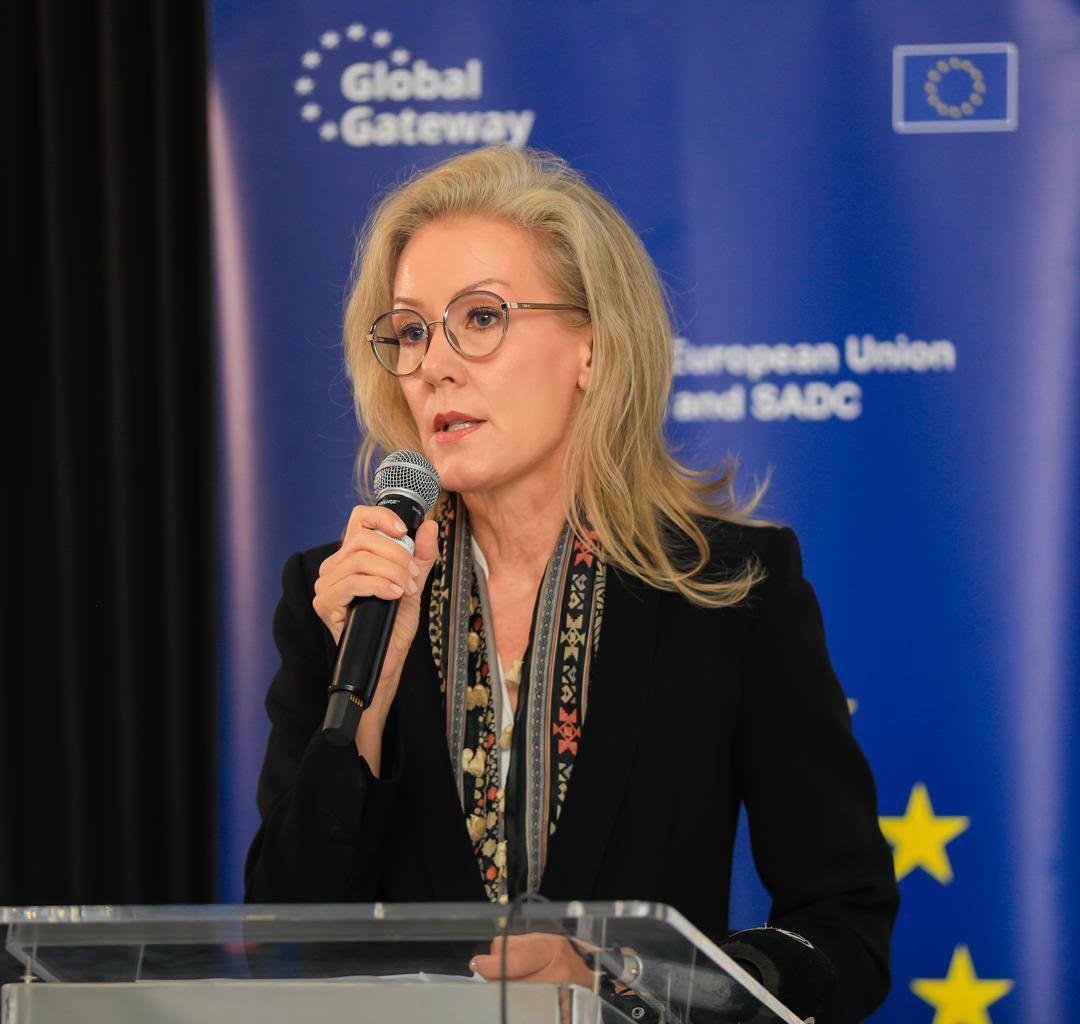
Petra Pereyra, Ambassador and Head of the Delegation of the European Union to Botswana and the Southern Africa Development Community(SADC), said “Together, we are supporting Botswana’s long-term development ambitions and working towards a more resilient economy — one that creates opportunities, strengthens institutions, responds to climate change, and improves quality of 3 life for all Batswana. The European Union is proud to count Botswana as a trusted partner and a valued friend, and we look forward to continuing this shared journey in the years ahead.”
She said, “Fluctuations in global diamond markets have reinforced the importance of economic diversification and long-term resilience. At the same time, rising electricity demand, constrained domestic supply, reliance on imported power, and growing climate commitments have made the transformation of the energy sector more urgent than ever.”
But within these challenges lies a powerful opportunity. Botswana has some of the highest levels of solar irradiation in the world. This gives the country exceptional potential to become a strong leader in renewable energy generation. By harnessing this natural advantage, Botswana can reduce dependence on fossil fuels, strengthen energy security, stimulate private sector investment, create jobs, and position itself as a regional leader in clean energy development.
“The Government of Botswana has already recognised this opportunity. Renewable energy and energy efficiency are now central pillars of the country’s new development agenda,” said Pereyra.
She said, “National strategies such as Vision 2036, the National Energy Policy, the Botswana Economic Transformation Programme, the Integrated Resource Plan and the recently launched strategic guidance under the Energy Compact all point clearly towards a more diversified, sustainable, and climate-resilient economy.”
ASPIRE is a flagship initiative funded by the European Union and implemented in partnership with the Ministry of Minerals and Energy through the Department of Energy, Botswana Power Corporation, the Botswana Bureau of Standards, and the Botswana Energy Regulatory Authority.
It brings together international expertise and local knowledge to strengthen institutions, improve the policy and regulatory environment, promote energy efficiency, and mobilise investment in renewable energy.
More than 60 public facility managers have already been trained to promote energy efficiency and rooftop solar adoption, and 42 solar practitioners have successfully completed nationally recognised training. The programme has also supported regulatory reforms to strengthen private sector participation in the energy sector and is contributing to the review of Botswana’s Rooftop Solar Programme. These early achievements show that ASPIRE is not only a policy initiative; it is a practical programme focused on results, capacity building, and long-term impact.
Bogolo Joy Kenewendo, Minister of Minerals and Energy, said “A reliable, affordable, sustainable energy is no longer a simple infrastructure issue. It is an economic issue, it is an investment issue, it is a job issue and ultimately it is a national development issue. Without reliable energy, there can be no meaningful industrialisation.”
She said, “Without reliable energy there can be no globally competitive mining sector. Without reliable energy we cannot talk about the development pf value chains and supply chains. Without reliable energy there can be no private manufacturing, no digital economy, no flourishing of SME’s, no sustainable economic diversification. Because energy powers opportunity.”
Officials revealed there is an expectation for South Africa to have a power deficit of nine gigawatts by 2030. This creates an opportunity for Botswana’s power generation.