

24th September 2026
Own Correspondent
The transformation of Botswana’s state owned enterprises has become critical with Botswana facing tighter fiscal conditions, rising expectations for service delivery and an urgent need to accelerate economic diversification as it pursues its True North of a digitally enabled, export-driven and people-centered economy.
The Government is therefore changing policies to ensure existing enterprises face the same scrutiny against mandate relevance, performance, fiscal exposure, public value and market impact.
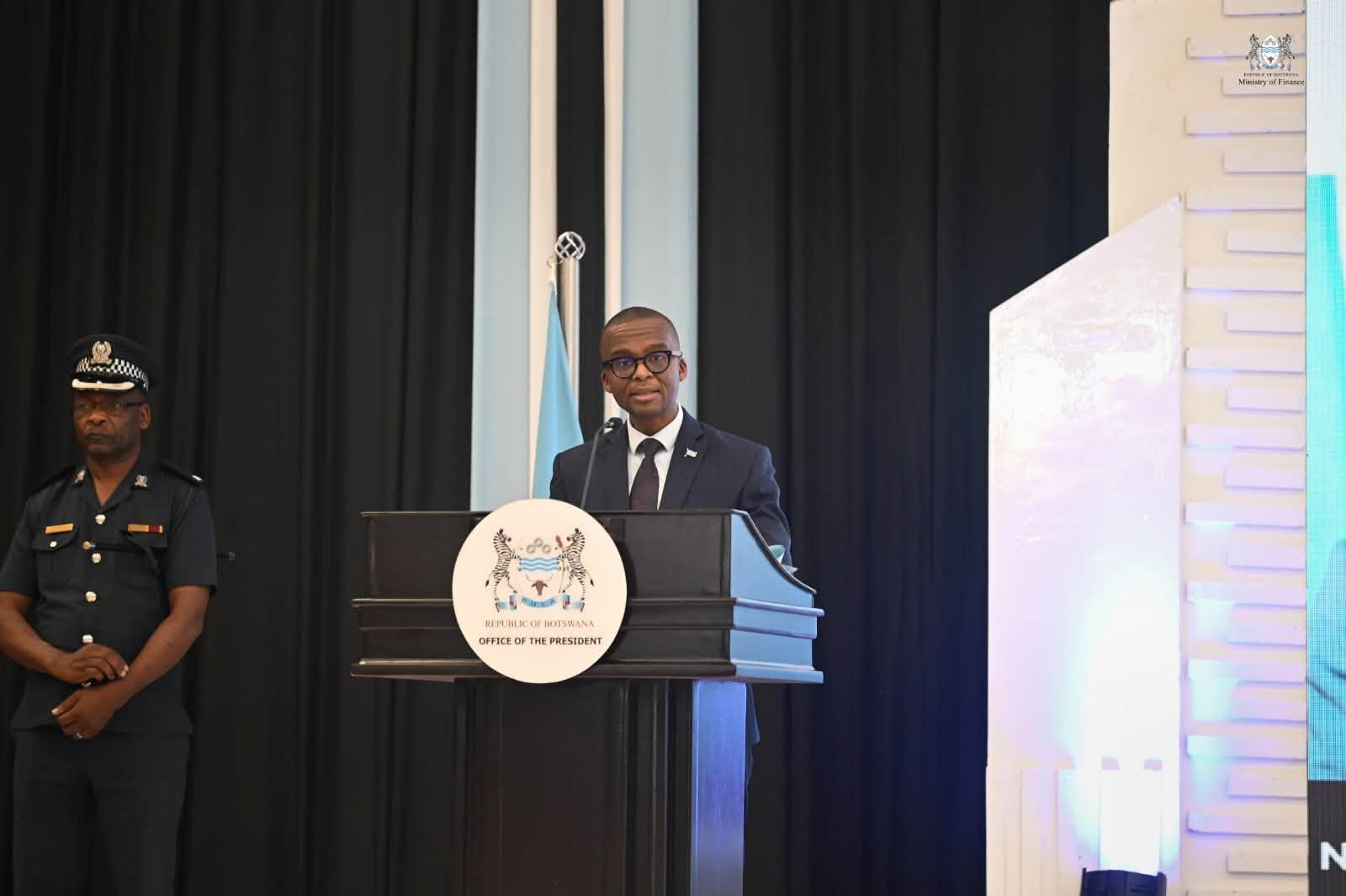
“At its core, the Policy asks Government to become a more deliberate owner, knowing why we own an enterprise, what we expect from it, how we measure its performance, what risks it carries for the State and what we do when its original purpose is no longer being served,” said NDABA N. GAOLATHE, Botswana’s Vice President and Minister of Finance.
He said, “The Policy therefore begins with the rationale for State ownership itself, restricting commercial ownership to circumstances where there is a genuine economic, strategic or social case, including natural monopolies and market failures, essential public goods and services, long-horizon infrastructure, national resilience and strategic innovation.”
Government may be an owner, policymaker, regulator and purchaser, but these roles should not become so blurred that accountability disappears between institutions stressed Gaolathe.
A ministry should set policy and determine the public outcome it expects, a regulator should regulate the market fairly, a board should govern, and management should manage.
Government is therefore introducing a hybrid ownership model in which line ministries retain strategic responsibility while a dedicated Oversight Authority maintains a consolidated view of the SOE portfolio, sets governance standards, monitors performance, tracks fiscal risks, enforces reporting discipline and reviews major investment decisions.
“That consolidated view gives Government the ability to see risks earlier and act with greater discipline,” said Gaolathe.
Officials say transfers, guarantees, on-lending, operating losses and public service obligations all carry consequences for the fiscus and compete with other national priorities, which is why Government needs to know what it owns, what those enterprises cost, what value they create and where intervention is required.
“The Policy introduces Shareholder Compacts, Letters of Government Expectations and Statements of Corporate Intent to translate broad mandates into measurable commitments, giving boards a stronger basis for accountability and Government a firmer basis for assessing performance,” said Gaolathe.
He said, “Where Government requires a commercial SOE to provide a social or public service below commercial cost, that obligation should be identified, costed and funded transparently, because an enterprise cannot be judged accurately when obligations imposed by Government remain hidden inside its balance sheet.”
Gaolathe revealed that Botswana must also protect competitive neutrality so that State ownership does not distort the markets we are trying to develop.
Singapore demonstrates what disciplined State ownership can achieve when commercial assets are managed at arm’s length from day-to-day political intervention, with boards and management carrying responsibility for commercial decisions and non-commercial public bodies governed separately.
“The lesson for Botswana is not to reproduce Singapore’s model wholesale, but to understand the disciplines beneath it, particularly the separation of responsibilities, professional governance and clarity about what the State expects from the assets it owns,” said Gaolathe.
He said, “New Zealand offers another useful lesson, linking Statements of Corporate Intent to statutory commercial obligations while requiring Government to pay explicitly for non-commercial work imposed on an SOE.”
Sweden and Norway have also developed systems of professional ownership, consolidated reporting and periodic review of the rationale for State ownership, requiring Government to explain why particular enterprises remain in public hands and to revisit that rationale over time.
Debswana has demonstrated what strong shareholder arrangements, professional management and commercial partnership can achieve. The listing of Botswana Telecommunications Corporation showed that State participation and market discipline can coexist, while the Pula Fund has given Botswana experience in the long-term management of national assets.
“We therefore approach this reform with a framework, international evidence and domestic experience, while recognizing that important areas still require refinement,” said Gaolathe.
He said, “We need stronger treatment of fiscal risk, borrowing, guarantees and contingent liabilities, greater precision in the respective responsibilities of line ministries and the Oversight Authority, firmer consequences for persistent under-performance and better discipline around timely financial reporting.”
The eventual law will define where ministerial authority begins and ends, what boards are responsible for, what powers the Oversight Authority carries, how performance obligations are enforced, how public service obligations are funded and how Government manages borrowing, guarantees and other fiscal risks.
It will also provide an orderly framework for restructuring, merger, distress, divestiture or closure where an enterprise can no longer fulfil its mandate effectively, while establishing consequences for persistent failure, unlawful interference, false reporting and conflicts of interest.
Those rules should endure beyond changes in administrative structures and leadership, giving the ownership system institutional continuity.