25th May 2026
Sello Motseta
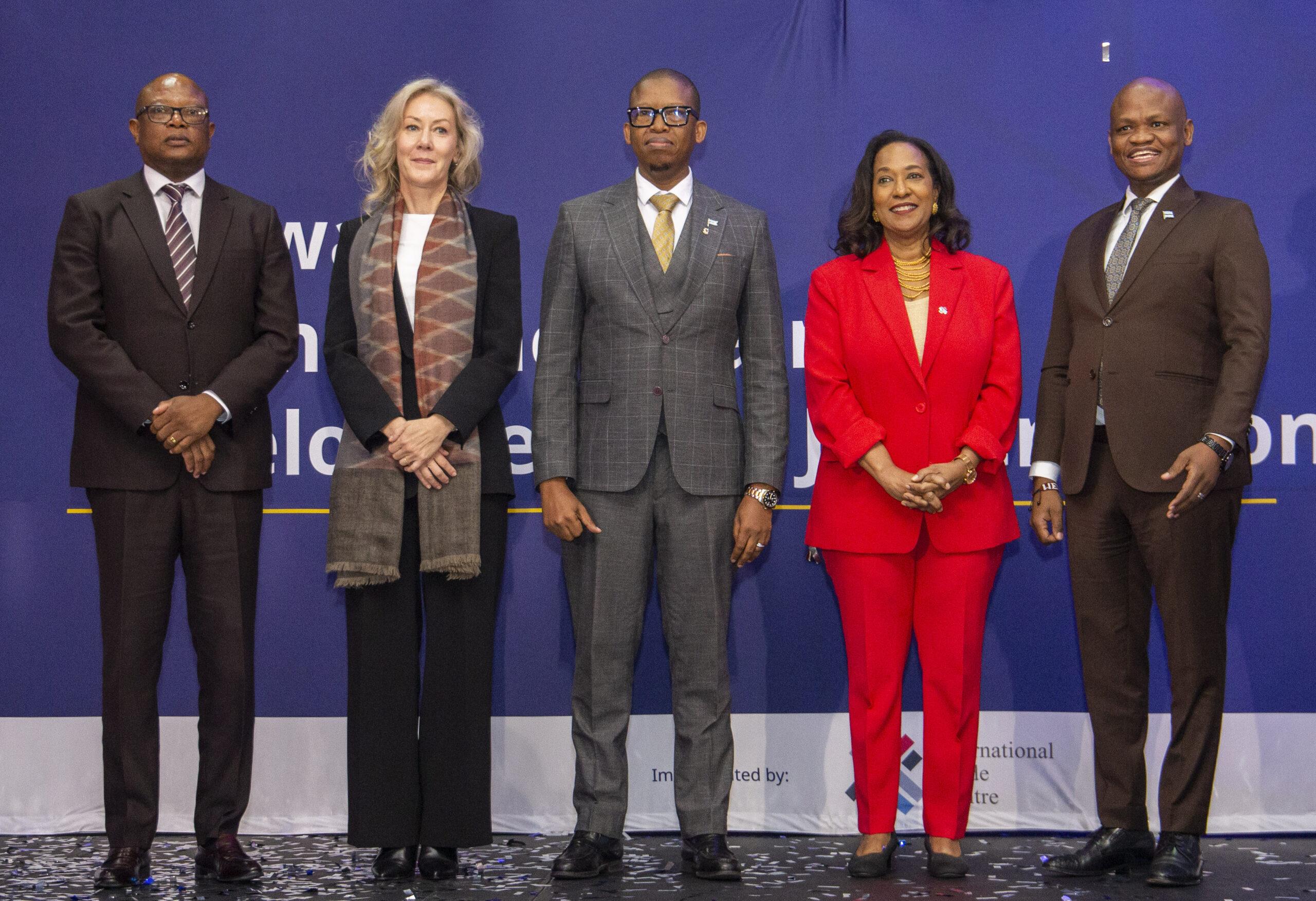
The Botswana–European Union today unveiled the green value chain development prrogramme to help build an economy that is not only competitive, but also resilient, sustainable, and firmly aligned with global environmental commitments.
The Green Value Chains Programme will contribute to improved food security, reduced dependence on imports, growth in agro-processing, and increased participation in regional and international markets. These outcomes are interconnected and together will strengthen the resilience and sustainability of the agricultural sector.
Tiroeaone Ntsima, Minister of Trade and Enterpreneurship, said Allow me, to begin by acknowledging the European Union for its steadfast support of Botswana’s economic transformation agenda. The EU has long stood as a reliable partner a steady hand through changing seasons and this programme is yet another testament to our shared commitment to sustainable development, inclusive growth, and the empowerment of our people.
He said, “I wish, too, to recognise the International Trade Centre for its technical leadership and its close collaboration with Botswana. We have seen, with our own eyes, the depth of engagement between the ITC and our state‑owned enterprises in ensuring that this programme delivers concrete and measurable results for our nation.”
Officials revealed that this initiative is launched at a moment when the global landscape is shifting and allows Botswana, to focus on green value chains is both strategic and far‑sighted.
It therefore positions Botswana, in the emerging global markets, where sustainability is no longer a distant aspiration but the very currency of trade, of investment, and of consumer preference.
Officials revealed the successful implementation of this programme, will have a positive impact on communities, on enterprises, and on institutions across the length and breadth of Botswana.
Permanent Secretary, Joel Duke Ramaphoi, said “We sincerely appreciate our collaboration with ITC and the European Union in advancing an ambitious and timely agenda, one that seeks to accelerate economic diversification, generate decent and green jobs, and strengthen the competitiveness of high-potential value chains.”
He said, “This programme aligns fully with Botswana’s national priorities under Vision 2036, the Botswana Economic Transformation Programme, and our national budget focus on inclusive growth, human capital development, and structural transformation.”
The objective of the Ministry of Trade and Enterpreneurrship is clear: to facilitate the transition from a resource-based economy to a diversified, knowledge-driven and export-oriented economy.
“The focus of the programme is on ecotourism and horticulture value chains. These value chains were selected because they combine comparative advantage, market opportunity, and the capacity to generate local value addition,” said Ramaphoi.
He said, “Ecotourism builds on Botswana’s globally recognized natural heritage and community-based tourism models, while horticulture offers opportunities for food security, import substitution, agro-processing, and participation in regional and international markets. Together, they represent pathways toward diversification beyond traditional sectors and toward more broad-based participation in economic activity.”
Across both sectors, the programme will apply an integrated and systems-based approach. It will be an investment in targeted capacity development using a trainer-of-trainers model. This will ensure that knowledge and skills are institutionalized locally and scaled sustainably.
“Secondly, it will strengthen business support organizations and ecosystem actors. Competitive enterprises do not operate in isolation; they require functional institutions, coordinated policies, access to market intelligence, and responsive support services. As a ministry we are committed to create an enabling environment that allows SMEs and community-based enterprises to thrive,” said Ramaphoi.
He said, “Thirdly, the programme will provide tailored policy and regulatory support. Competitiveness is shaped not only at the enterprise level but also by the broader policy framework. Through structured dialogue and technical inputs, we will work with relevant ministries and agencies to identify regulatory bottlenecks, enhance standards compliance, and align trade-related measures with international commitments and evolving market requirements.
Officials revealed that the Programme Management Unit (PMU) based in Gaborone will soon be in place, to ensure local ownership and rapid implementation, a robust governance structure (Technical Committee and Project Steering Committee) with quarterly reviews.
“Each and every day, Botswana imports baskets of fresh produce that our own soil stands willing and able to bear. We are faced with the scarcity of water, the constraints of land access, and market linkages as fragile as threads too easily broken,” said Dr Edwin Gorataone, Acting Minister of Lands and Agriculture.
He said, “Our farmers are working hard and remain committed to the development of the agriculture sector. However, they continue to face challenges due to limited access to appropriate tools, modern knowledge, and reliable markets. As a result, much of their productive potential remains underutilized, even though the opportunities for growth and increased production are clearly available.
This programme is a practical response to these challenges. In partnership with the International Trade Centre, we will identify priority horticultural products, including vegetables, herbs, and indigenous crops, as well as the areas with the greatest potential for job creation.
The programme will also provide targeted training and capacity-building support to small-scale farmers and cooperatives to improve their production, business, and market access skills.
It will also support the development of a horticultural price-information mobile application to help farmers access up-to-date market information, including prices and market opportunities. This will enable farmers to make informed decisions on where and when to sell their produce.
The programme will also strengthen linkages between farmers and the tourism sector to create reliable markets for locally produced horticultural products.
Tthe adoption of climate-smart agricultural practices such as drip irrigation, rainwater harvesting, and the use of drought-resistant crop varieties becomes essential. In line with this, our grants scheme will, accordingly, prioritise investment in water-efficient technologies, so that we may make every drop count and turn scarcity itself into a school of innovation.