


18th May 2026
Own Correspondent
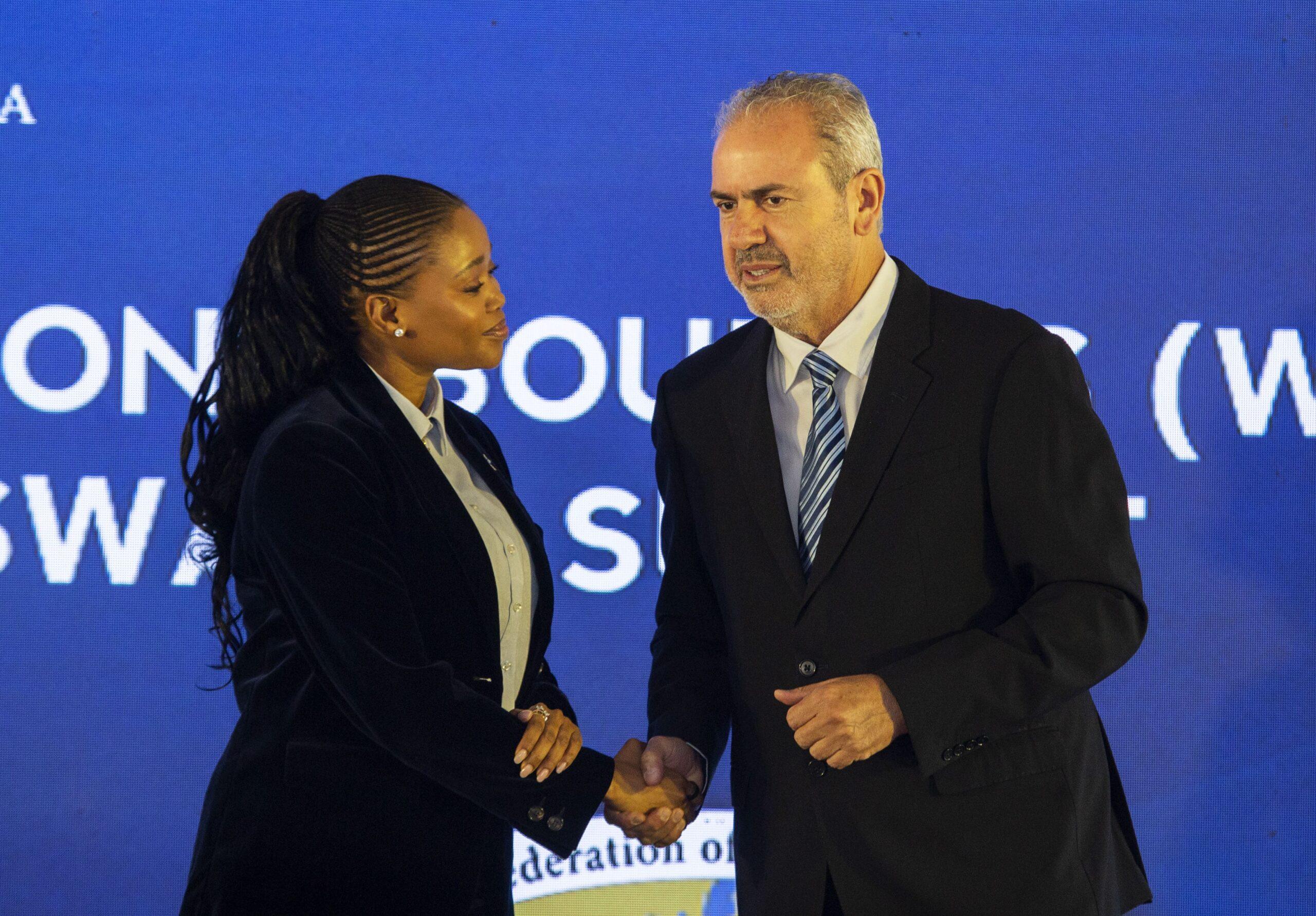
Botswana and Angola have officially joined the World Diamond Federation Bourse(WFDB) as nation affiliated members. The WFDB represents the world’s major diamond bourses – the trading centres that are the backbone of international diamond commerce.
“Today, for the first time, two of the world’s most important producing nations are seated at the table where the future of our industry is shaped,” said Yoram Dvash, President of the World Federation of Diamond Bourses.
He said, “Both countries were also central to the Luanda Accord – a commitment to the promotion and integrity of the natural diamond. Their membership of the WFDB is the next expression of that
same vision. We welcome Botswana and Angola with great pride and great expectation.”
The Gaborone Summit is not only a unique celebration of 60 years celebrations of diamonds for development in Botswana. It is a working session.
“And despite the challenges in the landscape, I am confident of the long-term outlook for natural diamonds,” said Dvash.
Dvash maintained that this confidence is built on three things:
Provenance and traceability – the ability to tell the full story of a diamond and why it matters,
Value chain development – building downstream capability within producing nations, and
Training and transformation – ensuring bourses evolve as the industry evolves.
Over the past year Dvash revealed he had spoken openly about unity. The challenges industry faces are too large for any organisation to address alone.
“What I see in this room is exactly the coalition the natural diamond needs. And with Botswana and Angola now part of our family, that coalition has become significantly stronger,” said Dvash.
He said, “The natural diamond is a symbol of permanence and value. It has lasted for generations. It will last for generations more.”
Botswana has built something lasting from its diamonds observed Dvash. “That is nation-building through responsible production and it is why we chose to hold this summit here,” said Yoram Dvash, President of the World Federation of Diamond Bourses.
He said, “This is one of the great development stories of our time. Diamonds were discovered shortly after independence in 1966. Today they account for around 80 percent of Botswana’s exports
by value and 30 percent of GDP. That revenue has built schools, hospitals, roads and institutions. GDP per capita has risen from just over 100 dollars in 1966 to more than 8,500 dollars today.”
Botswana is home to the richest diamond mine in the world by value and the largest mine by area. Even in the current market environment, Botswana’s mines are strategically vital, and their
long-term outlook is one of resilience and growth.
Officials on the sidelines of the meeting stressed that nation-building speaks to what diamonds can do when managed with integrity: employment, skills, infrastructure, institutions. Responsible luxury speaks to what consumers demand: provenance, transparency, and a story they can be proud of. Together, these define the way forward for our industry.
Donald Gaolsaloe, Permanent Secretary for the Ministry of Minerals and Energy, said “We fully appreciate that the future competitiveness of the diamond industry will increasingly depend not only on production, but also on participation within the broader systems that shape trade, trust, market access, transparency, provenance, and long-term value creation.”
He said, “That is why today’s Summit is important to Botswana. As a country, we acknowledge that the world of diamond bourses, structured trading ecosystems, exchanges, and evolving market frameworks remains an area in which Botswana continues to learn, engage, and develop.”
Botswana’s engagement with institutions such as the World Federation of Diamond Bourses, together with ongoing discussions around market systems, exchanges, and evolving trading frameworks, reflects our growing interest in understanding how producing countries can participate more meaningfully within the broader architecture of global diamond trade.
“As a country, we recognise that the future of the diamond industry will increasingly be shaped not only by production capacity, but also by transparency, trusted market systems, traceability, consumer confidence, efficient trade ecosystems, and the ability to clearly communicate the value and authenticity of natural diamonds,” said Gaolsaloe.
Gatsaloe revealed that in today’s world, provenance matters more than ever before.
“Consumers increasingly want assurance about origin, ethics, authenticity, and impact. Botswana is proud to be part of a global movement that is strengthening confidence in natural diamonds through responsible sourcing, traceability, and trusted governance frameworks,” said Gaolsaloe.
He said, “We truly believe that Botswana’s natural diamonds carry a story that no synthetic product can replicate — a story formed over billions of years and connected to real communities, real livelihoods, and real national development.”
Botswana’s long-term vision remains clear. We aspire to position Botswana not only as a leading diamond producer, but as a globally respected diamond centre associated with: responsible sourcing, transparency, innovation and credible market participation.
This vision aligns closely with Botswana’s broader ambition of building a more diversified, export-led economy anchored on value creation, industrial participation, and global competitiveness.
“We see diamonds not only as a mineral resource, but as a strategic platform to advance skills, technology, branding, tourism, luxury positioning, and broader economic transformation,” said Gaolsaloe.
He said, “We recognise that achieving such a vision will require collaboration, partnerships, institutional development, and continuous learning. No country builds a globally competitive diamond ecosystem in isolation. It requires strong partnerships between governments, industry, market institutions, investors, and international organisations.”