

Kutlo Motseta
1st March 2026
Over the weekend, the Ministry of Basic Education and Child Welfare, hosted the Annual Africa Day for School Feeding at Royal Aaria Stadium in Tlokweng.
The day is commemorated annually on the 1st March, is led by the African Union and this year was themed: “Ensuring access to nutritious meals clean water and hygiene”.
The challenges of children learning on empty stomachs and its imperiling economic impact was discussed. It was stressed some children became top academic performers and national leaders, but whilst growing up in conditions of extreme poverty.
Poverty and the related absence of adequate meals amongst other factors, affects optimal academic productivity, school attendance, school performance and the continents future.
Various dignitaries highlighted the importance of the agricultural sector, hygiene and sanitation in meeting this continental challenge.
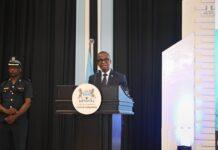
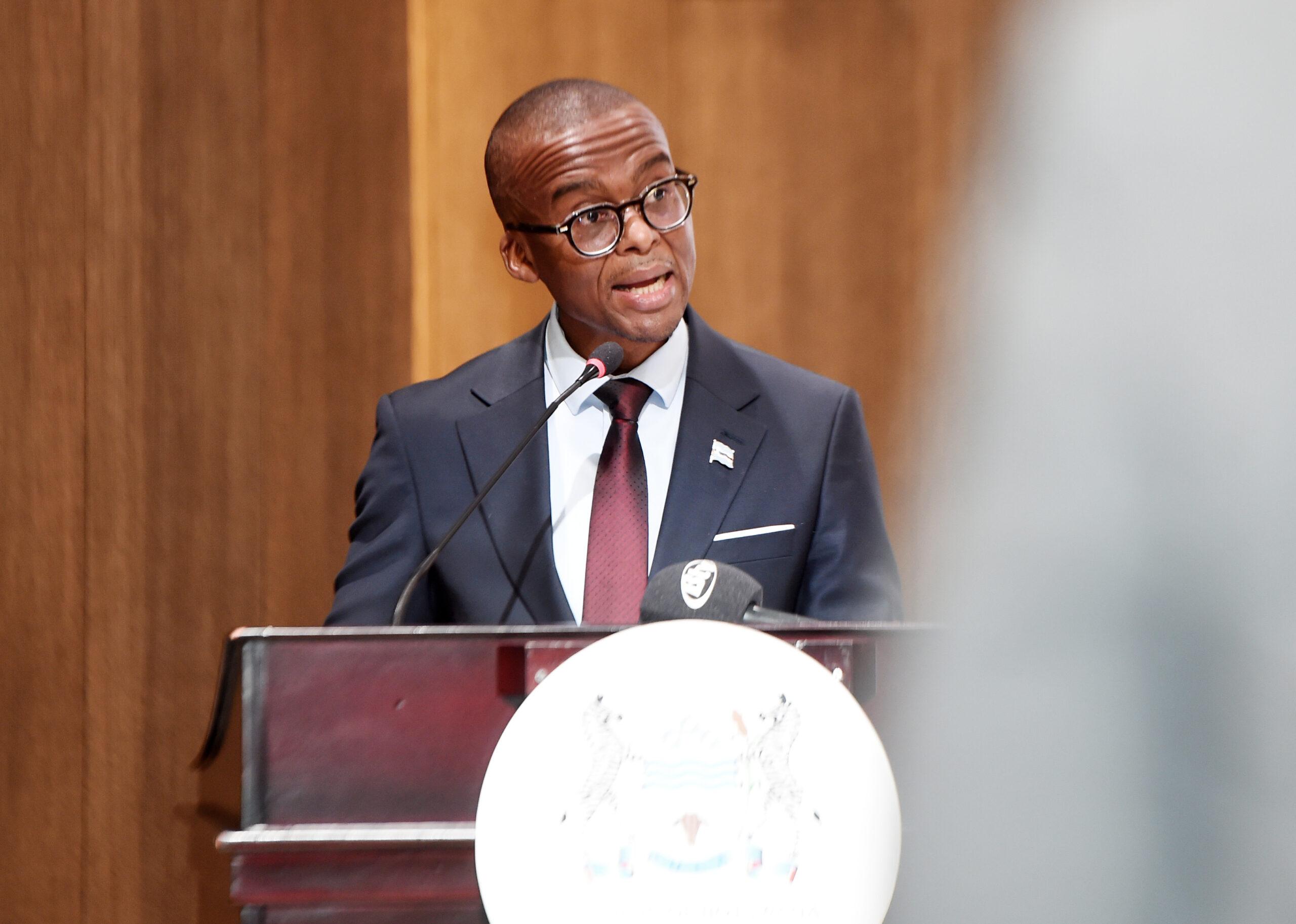
Botswana’s state Vice President Ndaba Gaolathe, officially opened the conference on Sunday 1st March and addressed the symbiotic economic relations between the school feeding system, sanitation, agricultural economy and the country’s future.
“… adolescent girls … attendance in school often depends on access to adequate hygiene facilities … school feeding must be viewed not only as a social intervention but as an economic catalyst, when linked to local agricultural production, it creates predictability for small hold farmers,” said Gaolaathe.
He said, “It reduces dependence on imports … Food alone is not enough, without clean water safe sanitation and sound hygiene system, hygiene cannot fully … translate into learning … Even the most nutritious meal loses its transformative power …. an Africa that feeds it children, is an Africa that believes in its future.”
The African Union Commissioner for Education, Science, Technology and Innovation, Professor Gaspard Banyankimbona, applauded African members states for their growing commitment.
“Over the last decade the number of children benefiting from the school feeding program has more than doubled, whilst the annual investment of US$ 2 billion (P25,125,600,000) in 2024, with an impressive 83% was financed by member states … Countrie’s have consistently increased budgets for the program … Every dollar invested in school feeding yields US$9 (P113.21) through in economic return human outcome and strengthened agricultural systems” he said.
Botswana’s First lady Ms. Kaone Boko delivered the keynote address at the dinner for schoolchildren.
“[Feeding programs] bridge the gap between those that are fed at home … there are children that only get to eat at school,” she said.
The First Lady also signaled the importance of passionate service providers in successfully investing resources and effort into the school feeding program.
“Mmamiki [Kamanakao] has passion for children as I do …. I have been working with her … if we invest in meals, we invest in Africa’s future … Africa’s stability. No African learner should have to learn on an empty stomach,” she added.
Many countries shared their experiences and revealed sizeable budgets for their school feeding schemes.
According to the Vice President Ndaba Gaolathe, Botswana which has a population just over 2,5 million, spends US$100 million (P1,256,280,000) annually on school feeding programs and feeds 400 000 learners nationally from pre-primary, primary to secondary school level.
“Over one billion pula is spent on small farmers, women and youth entrepreneurs … and on small scale manufacturers” he added.
Kenya revealed that it feeds 2.6 million children, intends to feed 4 million this year and has a budget of US$ 349 million (P4,389,931,400 )for this purpose.
“School feeding is not a handout it’s a strategic investment for farmers and boosts local economies … let us look at strengthening schools, strengthen agricultural markets … Africa’s farmers are Africa’s future”, said Kenya’s representative.
Namibia has a population of 3 million and 2061 schools, 288 of which are private. It has 957 00 learners of which 500 000 are fed daily meals at school.
“If they are not availed a meal, they don’t attend school”, said Dr. Sanet Steenkaamp, Namibia’s Minister Education, Innovation, Youth, Sport, Arts and Culture.
She elaborated that 70% of its population cannot read or write an English sentence. This goes further to show importance of the school feeding program, as the limits of a nation’s economic growth and national prosperity are heavily influenced by the educated populace.
Botswana’s President for the National Children’s Consultative Forum (NCCF), 14-year-old Mr. Tumelo Matinkeja of Francistown district, attended with his vice president Prosper Hule of Lobatse district. He delivered a presentation and pleaded for the inclusion of children.
“Nothing for us, without us, there is nothing that can be done without our presence. If it is talking about rights, we need to be present. We need child participation. We are advocating for children’s rights in Botswana.”
Minister of Child Welfare and Basic Education Professor Nono Kgafela-Mokokaa, said Botswana’s school feeding initiative is independent and was introduced in 1928, but the country would accept partnership with the international community.
“Botswana’s school feeding program is domestically owned … Botswana is willing to work other countries … tomorrow Botswana will join and sign to become a member of the schools meals foundation,” she said.
According to the minister Botswana has 800 000 primary school learners and 500 000 secondary school learners.