


9th July 2026
Own Correspondent
Botswana Unified Revenue Services(BURS) have revealed that the Value Added Tax Act, Income Tax Act and Tax Administration Act was designed to harmonize administrative and procedural rules for Income Tax and Value Added Tax Acts, simplify existing regulatory requirements and promote voluntary compliance and enhance clarity of the law.
Introducing a binding tax ruling system, registration Tax Agents, a Tax Tribunal, voluntary disclosure and the harmonization of record keeping to 8 years – VAT and Income Tax.
There is a new tax bracket for individuals earning P400 001 and above at a tax rate of 27.5%, there is also a nominal increase in the corporate tax rate from 22% to 24.5% and a 3% withholding tax on Insurance premiums.
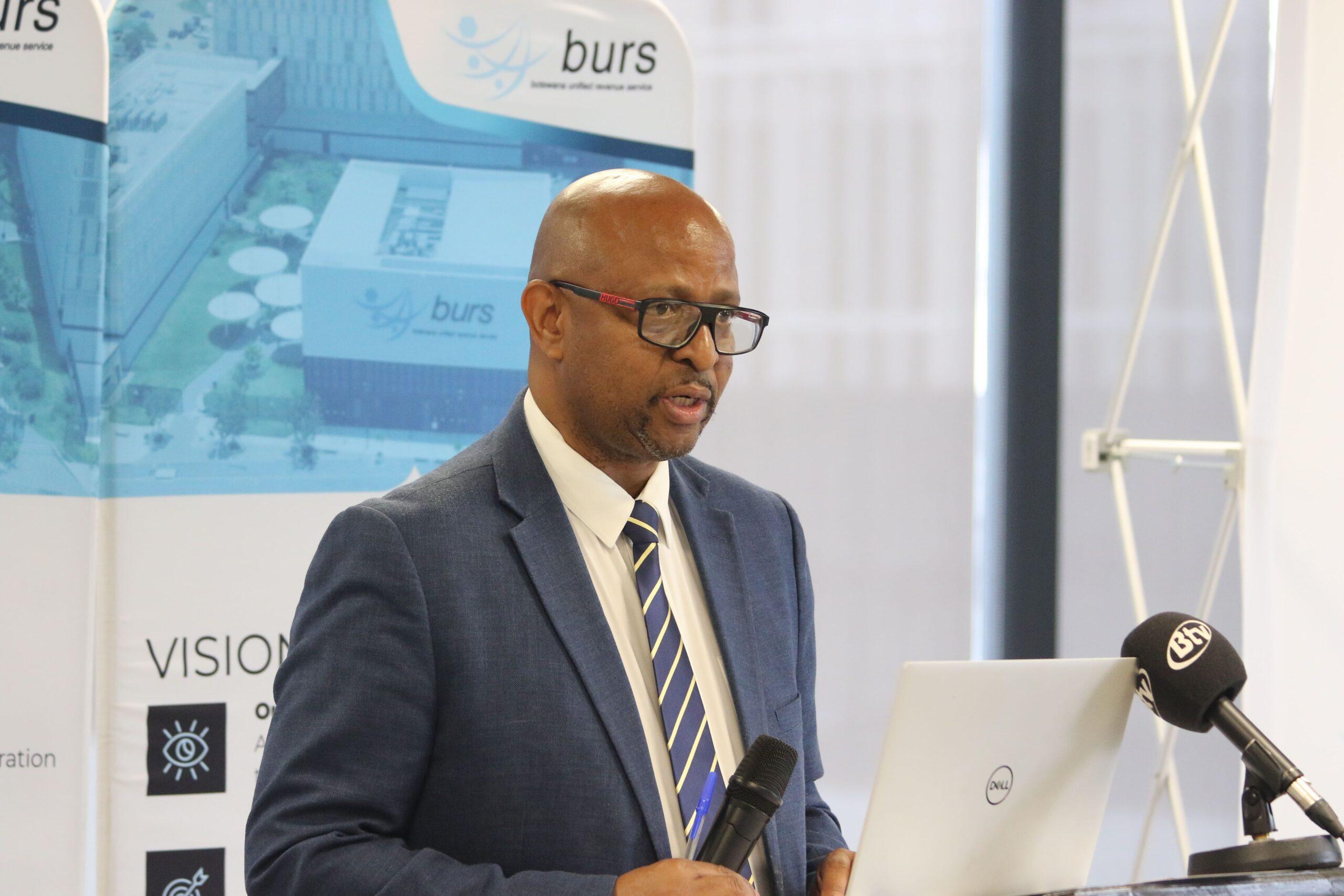
Phodiso Valashia, Acting Botswana Unified Revenue Service(BURS) Commissioner General, said “Government has undertaken one of the most significant reforms of Botswana’s tax system in recent years. These reforms are not about collecting more tax.”
He said, “They are about creating a better tax system – one that is fair, simple, transparent and trusted. Because a tax system that earns public confidence will, over time, also earn a national culture of voluntary compliance.”
Other changes include reducing of non-resident corporate tax rate to 24.5%, Tax on repatriated profits for non-residents and a repeal of 4% withholding tax on sale of livestock for slaughter.
“As a nation, we should be ambitious enough to move decisively towards atax-to-GDP ratio of 25% over the next three years. That is far more than a fiscal target. It is a national development ambition. It is about building a Botswana that increasingly finances its own development, strengthens its economic resilience, creates opportunities for its people and invests with confidence in its future,” said Valashia.
He said, “The future is calling upon us to strengthen a different foundation – a foundation built on the productivity of our economy, the integrity of our public institutions, the confidence of our business community and the willingness of every one of us to contribute our fair share towards national development.”
Officials acknowledged that prosperity is not created by taxation, nor can it be sustained by debt alone. It is created by productive businesses, innovation, investment and the hard work of Batswana.
“The role of a modern tax system is to ensure that the prosperity we create as a nation is translated into better education, quality healthcare, stronger infrastructure, greater economic opportunity and a better quality of life for every Motswana. It enables Botswana to finance more of its own development, strengthen its fiscal sovereignty and reduce excessive dependence on debt,” said Valashia.
He said, “The Botswana of tomorrow will not be determined by the taxes we collect. It will be determined by what those taxes make possible. That is the purpose of these reforms. Not simply to build a stronger tax system, but to build a stronger Botswana.”
A number of changes are forthcoming such as VAT registration of non-resident suppliers of remote services, introduction of reverse charging by registered persons.
Extension of input VAT claim period to 12 months, Taxation of private medical services and Zero-rating of prescription drugs. Reduction of current list of zero-rated items. Mandatory registration of Deputy Sheriffs, VAT return submission date within 28 days, revising registration requirements for construction and manufacturing and licensees undertaking mining or petroleum operations.
“We are embracing advanced data analytics, artificial intelligence and modern digital technologies to deliver better services, make better decisions, identify risks earlier and strengthen the integrity of our revenue system,” said Valashia.
Registering private medical service providers has begun and charging of registered providers to commence 1st August 2026 with Deputy Sheriff to be registered in September 2026.
The registration for reverse charging by Government Entities and large unregistered persons is expected to commence on 1st August 2026. Reverse charge reporting by registered persons commencing August tax period, registration of remote services suppliers is ongoing.
“Modernisation is not about technology for its own sake. It is about using better laws, better systems, better information and better capabilities to make compliance easier for honest taxpayers, strengthen revenue assurance and enable Government to respond more effectively to the needs of our country,” said Valashia.
He said, “It is this vision that is driving reforms such as taxation of remote services, the National Electronic Invoicing Initiative and the wider digital transformation of the Revenue Service.”
Other changes include reducing of non-resident corporate tax rate to 24.5%, Tax on repatriated profits for non-residents and a repeal of 4% withholding tax on sale of livestock for slaughter.