

21 August 2025
Despite an accommodative policy framework, the Bank of Botswana’s Monetary Policy Committee(MPC) has revealed that the domestic economy faces challenges relating to inadequate traction of policy initiatives, compounded by the lack of economic diversification and weakening fiscal and external positions.
The Bank therefore welcomed the launch of the Botswana Economic Transformation Programme (BETP), which is expected to bring rigour, agility and real-time decision making development planning and project implementation. The BETP will also include high-impact and scalable projects, with potential to drive economic transformation.
“It is not the number of projects, but the impact they will have in the economy, which
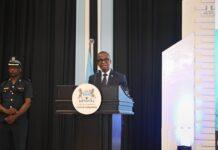
will be game-changing,” said Cornelius K Dekop — Governor of the Bank of Botswana.
He said, “Inflation is projected to increase in the short term, averaging 3.5 percent in 2025 and 5.9 percent in 2026, but temporarily breach the upper bound of the objective range in the second quarter of 2026.”
Central Bank officials say in an environment where several commercial banks have concentrated funding, maintaining a significant part of their assets outside Botswana, as well as uneven liquidity distribution amongst banks, a macro-economy dependent on government spending has generated a liquidity squeeze.
This has triggered a surge in wholesale deposit rates, as the severely affected banks bid aggressively to secure deposits/funding. Consequently, they increased their prime lending rates, with others not similarly affected following as well.
This has led to a rise in the cost of borrowing for consumers and businesses.
“Of concern is that this happens in an environment of an accommodative monetary policy stance, necessitated by the prevailing macroeconomic environment, notably, real gross domestic product (GDP) contraction,” said Dekop.
The Monetary Policy Committee has therefore decided to keep the Monetary Policy Rate (MoPR) at 1.9 percent.
The MPC met at a time when inflation outlook has significantly changed due to the
necessary exchange rate parameter adjustments exacerbated by greater-than-
anticipated market price setting for both exchange rate and retail prices.
Central Bank officials revealed today that recent interest rate adjustments by banks continue to counter the accommodative monetary policy stance.
“This has led to a rise in the cost of borrowing for consumers and businesses. Of concern is that this happens in an environment of an accommodative monetary policy stance, necessitated by the prevailing macroeconomic environment, notably, real gross domestic product (GDP) contraction,” said Dekop.
The global economy continues to experience increasing uncertainty due to shifting trade policies and geopolitical tensions. The United States of America (US)
has imposed trade tariffs for all countries with a base rate of 10 percent.
Botswana’s real gross domestic product (GDP) contracted by 1.7 percent in the
twelve months to March 2025, compared to a growth of 0.4 percent in the year to
March 2024. The weak performance was mainly due to the significant contraction
of the mining and generally subdued growth for the non-mining sectors.
The Ministry of Finance has revised real GDP growth forecasts for 2025 from a 3.3 percent growth to a contraction of 0.4 percent, a similar projection to that of the IMF.
The African Development Bank projects a growth of just 0.8 percent, down from 4 percent. Furthermore, the Ministry has revised growth forecasts for 2026 from 3.7 percent to 2.9 percent. The downward revisions mainly reflect the continued weak performance of the diamond industry, subdued global growth and the potential adverse effects of US tariffs.