



29th October 2026
Own Correspondent
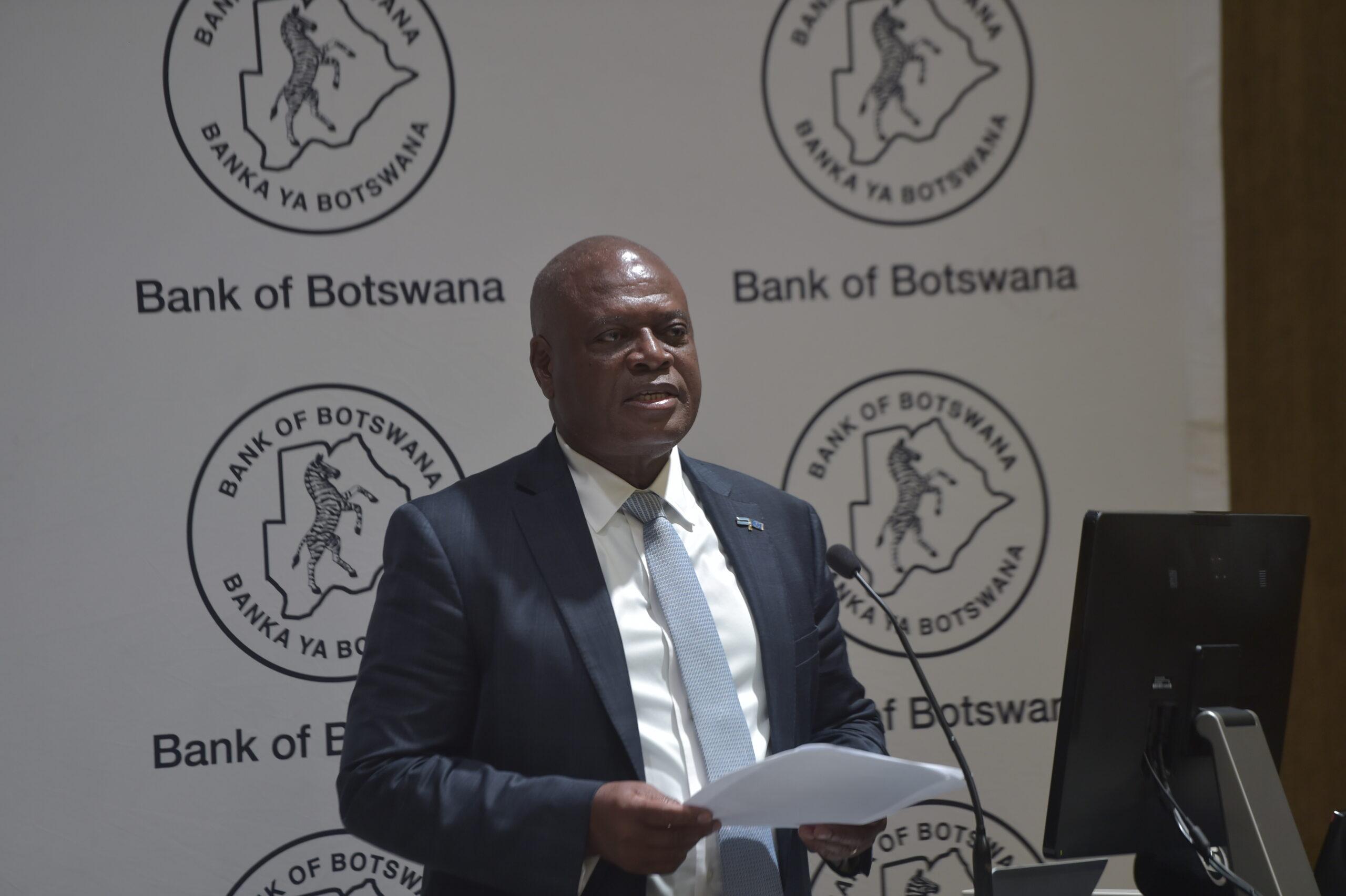
The Bank of Botswana(BOB) Governor says the central bank has lifted the moratorium on interest charges to protect a liberalized market.
Under the current environment involving moderation of funding costs and increasing liquidity the expectation is that the liberal posture will lead to a decrease in Prime Lending Rates. The Bank will continue to monitor developments and implement appropriate policy actions consistent with its mandate to maintain price stability and safeguard financial system stability.
“Under the current environment involving moderation of funding costs and increasing liquidity the expectation is that the liberal posture will lead to a decrease in Prime Lending Rates. The Bank will continue to monitor developments and implement appropriate policy actions consistent with its mandate to maintain price stability and safeguard financial system stability,” said Lesego Caster Moseki, Governor of the Bank of Botswana.
He said, “Domestic liquidity has improved since the last quarter of 2025, supported by increased government funding and spending, increased diamond receipts, and adjustments to monetary policy operations. This has moderated funding costs, potentially lowering lending interest rates with improved prospects for policy transmission.”
The MPC projects that inflation will remain above the 3 – 6 percent objective range in the near term, while growth remains subdued amid adverse external developments.
The Committee unanimously decided to: (a) maintain the MoPR at 5.5 percent; (b) conduct 7-day Bank of Botswana Certificates auctions, repos and reverse repos at the MoPR of 5.5 percent; (c) maintain the Standing Deposit Facility (SDF) rate at 4.5 percent, 100 basis points below the MoPR; (d) maintain the Standing Credit Facility (SCF) rate at 6.5 percent, 100 basis points above the MoPR; and (e) lift the moratorium for commercial banks on their Prime Lending Rates.
The Monetary Policy Committee (MPC) convened against a backdrop of global economic resilience, despite challenges arising from shifting trade relations, supply chain disruptions and geopolitical tensions, particularly the ongoing conflict in the Middle East.
Technology-related investment and demand, together with global supply adjustments, including rerouting of trade flows and the release of inventories, help mitigate the adverse effects of the conflict. Meanwhile, there is upward pressure on prices globally that could result in inflation remaining high in the short term.
This is due to higher commodity prices and continued uncertainty surrounding the duration and resolution of the conflict.
Real gross domestic product (GDP) grew by 3.7 percent in twelve months to June 2026, compared with a contraction of 2.9 percent in the corresponding period ending June 2025. The recovery in economic activity was underpinned by a stronger performance of the mining sector.
According to the International Monetary Fund’s October 2026 World Economic Outlook report, global growth is projected to remain subdued at 3.1 percent in 2026, down from 3.5 percent in 2025.
Persistent geopolitical tensions, elevated energy prices and trade policy uncertainty continue to weigh on the global economic outlook.
Domestically, the Ministry of Finance projects an economic recovery in 2026 and 2027, with growth forecast at 3.8 percent and 4.1 percent, respectively. The anticipated recovery reflects stronger-than anticipated economic performance in the first half of 2026, underpinned by higher diamond production.
“It is expected that speedy implementation of the economic diversification initiatives under the National Development Plan 12 and Botswana Economic Transformation Programme could fast-track economic transformation with a positive impact on economic growth. The growth outlook remains subject to downside risks, such as heightened geopolitical tensions, climate-related shocks, El Niño events, and heightened global trade fragmentation,” said Moseki.
Headline inflation decreased 9.3 percent in August 2026 to 7.8 percent in September 2026, above the 3 – 6 percent medium term objective range. The decline was due to base affects associated with the increase in domestic fuel prices on 15 September 2025, which added 0.93 percentage points to headline inflation.
El Niño effects including below normal rainfall, droughts, heatwaves, crop failure and livestock deaths present an additional upside risk to the inflation outlook. Externally, elevated prices for oil, gas, fertilisers and industrial inputs, resulting from the ongoing conflict in the Middle East, are expected to continue exerting upward pressure on inflation.
Additionally, the increased global trade tensions and tariff measures are expected to heighten inflationary pressures.