






11th November 2026
Own Correspondent
The Financial Stability Council (FSC) concluded that Botswana’s financial system remains resilient and supportive of economic activity despite a challenging operating environment. This resilience rests on safe and sound banks and nonbank financial institutions (NBFIs), robust financial market infrastructures, and effective regulatory and supervisory frameworks.
Meanwhile, subdued economic activity, an uncertain global outlook and funding concentration continue to pose risks, but are moderated by resilient financial institutions, improving domestic liquidity, recovering foreign exchange reserves and ongoing reforms.
Earlier risks relating to government finances and impact on liquidity and cost of funding, are being effectively addressed through fiscal consolidation and timely budget financing arrangements. Since the May 2026 FSC meeting, the global financial system has remained generally resilient despite uncertainty emanating from geopolitical tensions.
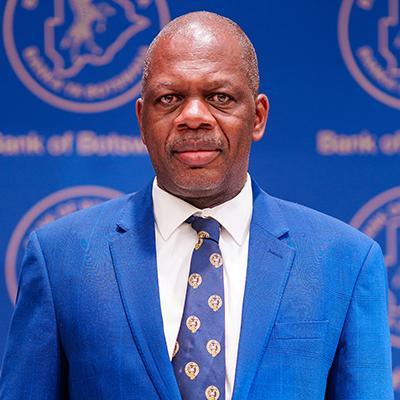
“Nonetheless, there is need to continue to pay attention to any vulnerabilities emanating from the sovereign financial sector linkages, liquidity and funding pressures, external sector risks and concentrated exposures,” said Lesego Caster Moseki, Governor of the Bank of Botswana.
He said, “Deeper interlinkages among banks, NBFIs, households, corporates and the public sector raise the possibility of risk transmission, requiring collaborative surveillance that integrates multi-source and multisectoral data. It is notable that fiscal consolidation measures and efforts to alleviate government financing pressures have significantly moderated both the liquidity constraints and funding costs. Meanwhile, measures to address deposit concentration are ongoing.”
Crypto-asset activities, climate-related financial exposures and cybersecurity threats are currently assessed as posing low risk to financial stability, but their capacity to evolve rapidly and spread across the financial system warrants continued vigilance.
Central bank officials revealed that systemic risks continue are monitored through macro-prudential indicators, which in the current moment remain favourable. Specifically, the slow credit growth is producing a negative Credit-to-GDP gap and limited risks from credit expansion.
Disciplined and risk-mitigated credit growth is the main banking operation and source of profitability and prospectively, supportive of economic activity, hence continuation of a sound banking sector and stable financial system.
“Against this background, banking sector stress tests indicate continued solvency and resilience to moderate shocks, although severe scenarios could result in prudential capital breaches,” said Moseki.
He said, “Ongoing legislative developments seek to balance the opportunities of financial development with appropriate safeguards.”
Thus, the National Payment Systems Bill was approved by Cabinet in August 2026. It is also common knowledge, that in October 2026, the National Payments Task Force approved the National Payments System Strategy (2026 – 2030).
“All these provide the architecture to facilitate innovation, adaptation, cross-border integration and connectivity, while maintaining safeguards to sustain integrity, patronage, inclusivity and, overall positive impact on the economy,” said Moseki.
Amendments to the Electronic Payment Services (EPS) Regulations were also gazetted in April 2026 to strengthen oversight, resilience and efficiency in the payments ecosystem. Several other financial sector laws are under review to establish clear governance and oversight, uphold market conduct and discipline, advance financial inclusion, strengthen consumer protection, restore fiscal sustainability and reinforce confidence in financial services.
“Work is also ongoing to strengthen crisis preparedness, including frameworks for bank recovery planning, bank resolution and emergency liquidity assistance, as well as enhanced macroprudential surveillance and supervisory practices to identify and mitigate emerging systemic risks,” said Moseki.
The FSC also continues to prioritise financial system integrity through implementation of Anti-Money Laundering, Combating the Financing of Terrorism and Counter Proliferation Financing (AML/CFT/CPF) measures ahead of the 2027 mutual evaluation.


