


25th August 2025
The 18th Edition of the Consumer Fair , which is a hallmark event of Botswana’s economic and commercial calendar was officially launched Monday with organizers stressing the need for entrepreneurs to thrive and innovate.
“And innovation does not belong only to large corporations, but it belongs to all of us, especially our SMMEs, whose creativity, agility, and resilience are essential to Botswana’s economic future,” said Gorata Gabaraane, Fairground Holdings Chief Executive Officer(CEO).
She said, “Over nearly two decades, this Fair has grown from a modest exhibition into a platform of national significance, where entrepreneurs, innovators, and business leaders come together to showcase their ideas, explore opportunities, and chart new paths for growth.”
According to organizers, the digital tools we use every day, from mobile payments to e-commerce platforms, have transformed the way businesses operate, and how customers interact.
By embracing technology, even the smallest enterprises can access markets that were once out of reach, connect with investors and grow exponentially. This is exactly what our theme seeks to highlight: “Embracing Technology and Innovation for Economic Transition.”
It emboldens us to understand that economic transition is possible, achievable, and within our grasp.
This year, the Consumer Fair is proud to introduce new and purposeful initiatives, most notably the Job Creation Forum brought about by SMME Empower led by Buca Matenge, with whom Consumer Fair has partnered with through the Trader’s Hub.
Through this platform, and over the next seven days, SMMEs will have access to masterclasses, networking sessions, business-to-business meetings, and direct engagements with investors, partners, and financiers.
This initiative is designed to equip our small and medium enterprises with the tools, knowledge, and networks they need to scale, formalise partnerships, and unlock funding opportunities.
This Fair allegedly provides enterprises with the platform to reposition themselves, gain visibility, and forge pathways for growth and resilience.
In addition to its commercial focus, the Botswana Consumer Fair proudly champions Corporate Social Responsibility through its “Pink Houses” initiative — six dedicated shops offered to community-based projects led by Babusi Village Development Committees and local organisations.
These spaces empower communities to generate sustainable income for causes such as education, women’s empowerment, youth entrepreneurship, and healthcare.
Through the Pink Houses:
Local initiatives access new markets and revenue opportunities;
Volunteers and leaders gain valuable entrepreneurial skills;
Visitors engage directly with impactful causes, building awareness and long- term support;
And importantly, the Fair proves that economic growth and social development can go hand in hand.
The Pink Houses reflect our belief that enterprise should drive social good. They stand as a clear example of how Fairground Holdings bridges commerce and community through innovation and inclusivity.
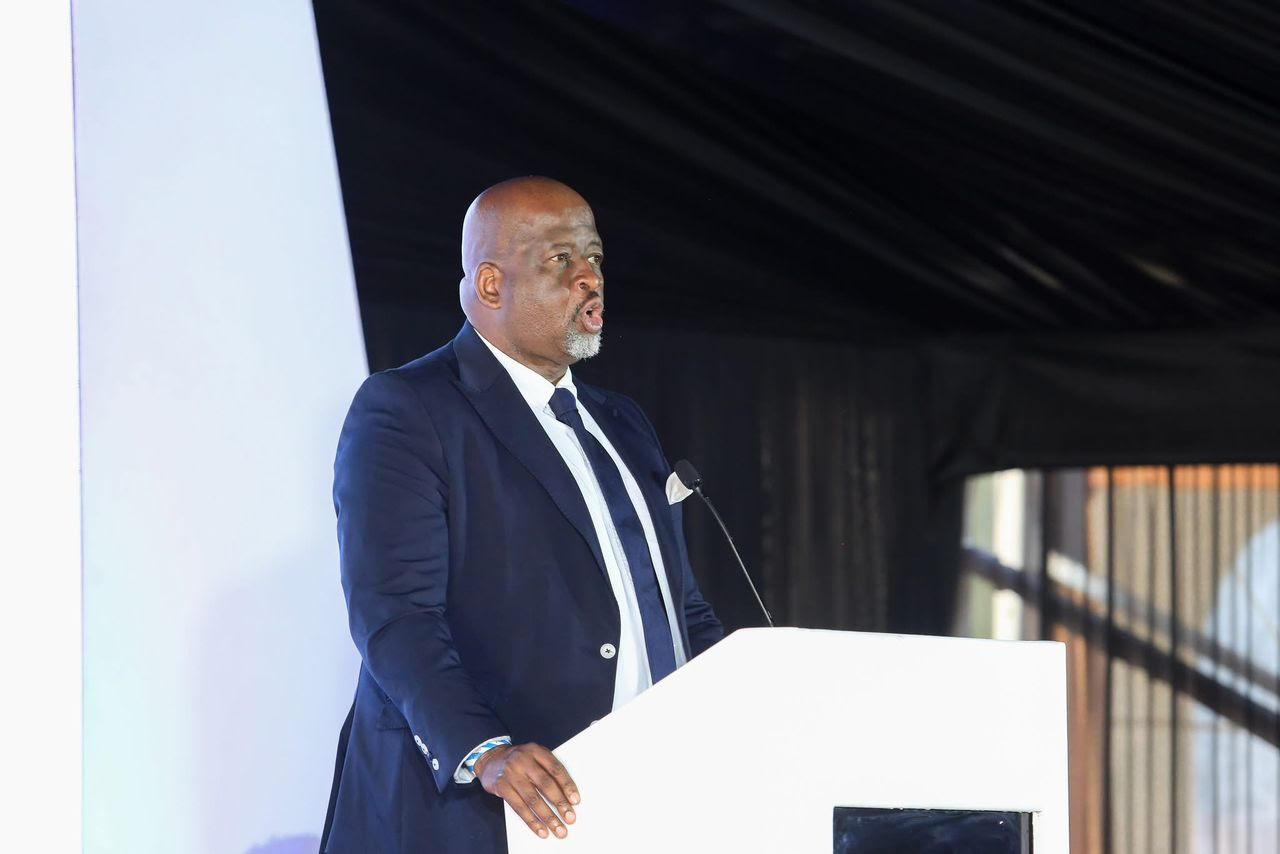
Neo Nwako, President of Business Botswana , said “What Fairground Holdings has built is more than a Fair, it is a national institution. It is a platform where SMMEs, established businesses, startups, and innovators come together to showcase their products, share their ideas, and engage with partners,
investors, and consumers. It is a launchpad for business growth, a hub for networking, and a space where ideas are tested, celebrated, and transformed into reality.”
He said, “We are undeniably in a transformative era where technology is foundational rather than optional. The world is shifting from manual processes to automated solutions, from analogue to digital platforms, and from traditional approaches to smart, data- driven systems. Innovation is fundamentally altering how we trade, live, and build resilient economies.”
Nwako stressed that Botswana’s goal is to move from a resource-dependent economy to a diversified, knowledge-based one. This requires entrepreneurship, digitalisation, and a commitment to inclusive growth. Technology is not just an enabler; it is a catalyst for sustainable industries, improved competitiveness, and social equity.
“Innovation is not just gadgets or software, but it is human ingenuity,” said Nwako.