


Kutlo Motseta
8th October 2026
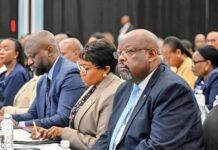
‘Open Democracy’, which is an international media organization, hosted its first conference in Botswana in order to observe and exchange ideas on democracy with the people of Botswana.
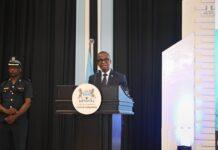
Minister of the State Presidency, Mohwasa delivered the opening keynote address. He discussed the meaning of democracy in Botswana’s and the importance of the local traditional ‘lekgotla’, which is the platform from which the international political ideal developed locally.
“Democracy has not been confined to legislation … but our communities had spaces in which people gathered and deliberated on issues affecting their lives. This remains an important tradition …democracy … is a way of protecting the dignity of every citizen equally before the law and [ensuring the] peaceful transfer of power,” he said.
“The kgotla is where people gather and discuss matters which affect their lives and where leaders listen. Democracy must be experienced in our everyday lives,” he added.
“People are struggling, essentially that is why they put us there … when democracy does not address inequality and exclusion, it risks becoming distant from the people it’s meant to serve,” acknowledged.
Botswana received a lot of international praise when the previous ruling party, the Botswana Democratic Party, led by the former President, Dr. Mokgweetsi Masisi, peacefully handed over power to the incumbent government without military incident, which has been experience of many African countries.
Delegates were warned that threats to democracy keep on evolving. New developments enable AI to develop capacities beyond the imitation of human reasoning – which it performs at a speed beyond capacity – and which, according to the Nobel Laurette, now includes the ability to imitate human intuition, which it constructs through its own coding.
Mohwasa warned that technology must not usurp its utilitarian function and take over the governance of people.
“We must ensure that technology becomes a servant of [constitutional] democracy and not its master,” he said.
He observed that AI and other instruments have increased access to information: “With this opportunity, comes responsibility because false information travels faster than the truth.”
“Public authority must serve people not control them … Democracy must be felt in everyday life … and in the way the leaders respond to the people’s concerns … In order for democracy to be meaningful, it must remain connected to the people,” said Mohwasa.
Mohwasa spoke about the practical importance of democracy.
“Our differences should not make us enemies … [people] must be allowed to contribute to decisions that affect our lives.”
Commenting on the patriarchal concerns in democracy he noted. “Women should be allowed to meaningfully participate in kgotla’s,” he noted.
‘Open Democracy’ is headquartered in London with bureaus in the United Kingdom, Africa and Latina America. It conducts investigative and movement focused journalism; monitors, engages with democratic institutions and promotes democracy. Amongst the many workshops that were held during the three-day conference, participants engaged on ways to approach the United Nations through the United Nations World Citizens Initiative. This is a campaign that the Open Democracy has been leading with Democracy Without Borders and CIVICUS. This campaign would enable successful applicants to put their topics and concerns on the UN agenda of the General Assembly of the Security Council.
Ms. Caroline Vernaillen who is the ‘Lead Global Policy and Advocacy’ at the Open Democracy writes: “The idea is simple but powerful: enable people from around the world to put proposals directly on the agenda of the UN General Assembly or the Security Council. In times of global challenges—from climate breakdown to pandemics and conflict—citizens deserve a mechanism to participate meaningfully in the decisions that affect them.”
“How would it work? A citizens’ committee, representing different regions, would register an initiative and have 18 months to gather five million signatures globally. If successful, their proposal would be formally considered by the UN. The proposal is modelled after the European Citizens’ Initiative, the only transnational tool of direct democracy currently in existence.”
The conference was sponsored by Friedrich Ebert Stiftung and the University of Botswana.