

Kutlo Motseta
7th JULY 2026
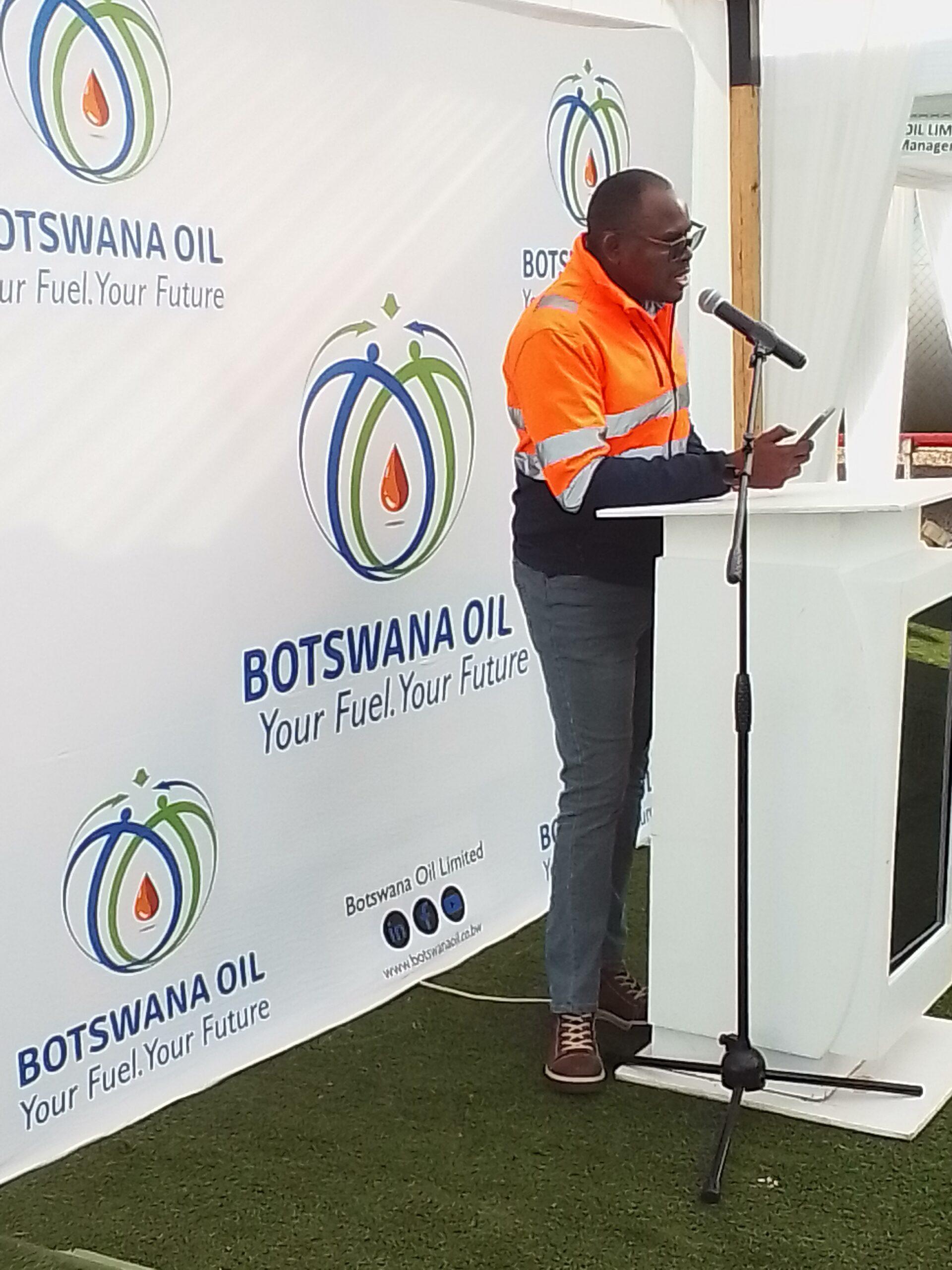
Botswana Oil Limited (BOL) opened its doors to the media to share it operations and new developments as seeks to increase its storage capacity for first time since the first facility was built in 1979.
“Today’s event marks out commitment to openness, transparency on mattes of national importance,” said William Bakeleng, BOL Depot Manager.
Bakeleng warned the public not to take the availability of petrol and diesel for granted because of the geopolitical conflicts and the changing economic climate, highlighting the indispensable nature of the energy industry.
“As Botswana, we rely on imports and sell to local buyers,” added Letshego Moeng, Chief Strategy and Sustainability Officer.
Some of the organizations plans and ongoing projects developments include the depots in Tshele Hills, Francistown and other in areas of the country. Secondly, turning coal to liquids and thirdly, increasing its presence in the aviation industry.
BOL Senior Manager, Mr. Lanka revealed that a study has shown that a country needs at least 90 days of storage, which BOL is currently working on across the country for the first time since the first depots were constructed in 1979 due the lack of local technical skill.
“So, we have to develop our [storage] capacity and diversify our [product supply] routes,” he added.
The industry is capital intensive smaller equipment, such as petrol meters costing P800 000. Though the BOL is the main local player, accounting for 65% of the product in the local market, there are over ten players in the market.
The onsite rules are very strict. All people are required to record a zero-breathalyzer test result, which is lower than the country’s drink and driving legal requirements. This is due to the flammability of the products, hence the extreme caution and eye for detail.
Products undergo rigorous testing before they are released to the market.
“[products] must be free of contaminants. We also look at international standards and local requirements,” said Ronny Orlando, BOL senior Manager HSSEQ.
Orlando further explained that when products are offloaded from sea, the shippers have to provide a certificate of origin. Thereafter the truck transporters are required to provide BOL with a certificate of analysis. And lastly, the retailers who receive products from BOL, run tests before they accept it.
BOL sometimes rejects consignments though such incidents are few and far in between. There was a incident where products did not meet local standards but passed the threshold test in some other countries, which resulted in BOL taking up the issue of local standards for review.
The strict requirements illustrate some of the steps BOL takes go avoid multimillion litigation from buyers, which can result in damage to tens of thousands of vehicles.
Petrol and oil contributes to global warming. Mr. Orlando explained that BOL complies with environmental measures to combat climate change. He added that BOL has procedures in place to “minimize emissions while transporting fuel we bring into the country … not releasing greenhouse emission can contribute to environmental damage.”
The Gaborone depot processes 1.2 million liters of product per day. 30 truck offload products into the market and 30 trucks supply product daily to BOL. The Gaborone’s depot stores 9 million liters of petrol and 12 million liters of diesel. BOL has undertaken projects to increase storage capacity and diversify the route for the transportation of product across the country.
“Most of the oil in storage is not for BOL but belongs to the government, so when there is an emergency in the market it can released into the market”, BOL Senior Manager, Mr. Lanka.
“We are lucky we have not had a dry space during the Iran war”, he added.
The majority of employees are citizens.
“At peak the Gaborone depot employs 360 people of which 44 are scarce skilled professionals,” said Lanka.
BOL’s developments across the country will increase the country’s fuel reserves which may help the country avert disaster in a future crisis as geopolitics continue in sensitive places in the middle east and as global economic uncertainty concerns investors.